Impact of Pension and OPEB Debt on Municipal Bond Ratings

Bottom Line Up Front
- S&P now gives more weight to debt when evaluating municipalities, making pension and OPEB liabilities more impactful on your Bond Rating.
- Communities with higher mandated benefits may feel greater pressure on their Individual Credit Profile (ICP) scores.
- Proactively managing and funding your pension and OPEB obligations is now a critical lever for strengthening your ICP score and protecting your community’s financial position.
When we talk with municipalities across the U.S. about their OPEB and pension plans, one question consistently rises to the top: “How does this impact our bond rating?”
It’s a fair question. Bond ratings influence everything from borrowing costs to long-term capital planning, and most communities are feeling increased pressure to show strong financial management in a challenging fiscal environment.
While many factors play into a rating, long-term liabilities, especially pension and OPEB obligations, have taken on greater importance. This became even more pronounced in September 2024 when S&P updated its municipal rating model and increased the weight of debt to 20%.
That shift means that the structure, funding, and management of your retirement benefit programs may have a more meaningful impact on your rating than in prior years, particularly for communities in states with more “generous” benefits or limited flexibility to adjust plan designs.
How S&P Evaluates Municipal Debt
Under S&P’s updated methodology, municipal ratings are built on five equally weighted factors, each contributing 20% to the overall score. Together, they provide a comprehensive view of a community’s financial strength and long-term resilience.
- Economy
Evaluates the underlying economic base, including income levels, employment trends, and tax base stability. - Financial Performance
Assesses your ability to generate consistent operating results and manage annual revenues and expenditures. - Reserves
Reviews the strength and reliability of available fund balances and long-term financial flexibility. - Liquidity Management
Measures how effectively your community manages cash flow, short-term obligations, and access to liquidity during financial stress. - Debt & Liabilities
Captures all forms of long-term obligations—traditional municipal debt as well as pension and OPEB liabilities, which can be significant depending on state policies and benefit levels.
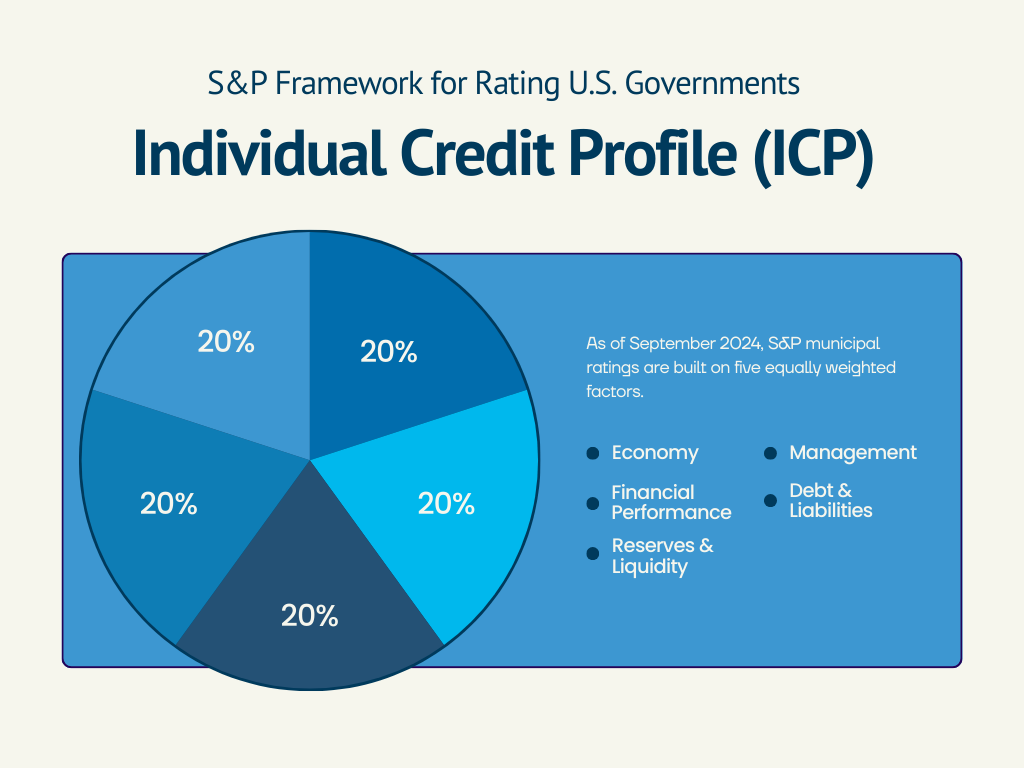
With the Debt & Liabilities category now carrying increased emphasis in the overall model, pension and OPEB obligations can meaningfully influence your rating trajectory, especially for communities with higher mandated benefit levels or historically underfunded plans.
Why the Increased Debt Weighting Matters
For communities that offer more generous pension and OPEB benefits, these long-term obligations appear as a much larger “debt” on the balance sheet. In contrast, municipalities that offer modest retirement benefits—or none at all—carry a comparatively lighter burden.
Some factors are within your control. For example, you can:
- Build and follow policies around financial reserves
- Maintain strong liquidity management practices
- Support healthy financial performance
- Manage traditional municipal construction and infrastructure debt
However, the economy is largely out of your hands. And in many states, so are the benefit levels for pension and OPEB programs. State-mandated designs can lead two communities with similar demographics and income levels to have dramatically different debt loads depending on their state’s pension and OPEB policies.
For municipalities in more “generous” states, maintaining a AAA rating may become increasingly challenging under S&P’s updated model.
What Should Municipalities Be Doing?
Despite the current budgetary headwinds, it remains critical to work toward funding the existing pension & OPEB promises. Reducing these long-term liabilities helps decrease your overall “debt” and demographic trends suggest that delaying action will only make future reductions more difficult and more expensive.
If you have more questions about this update or broader retirement and financial considerations, please reach out to your Odyssey Advisors consultant. We’re here to help you navigate the shifting landscape and strengthen your financial outlook.

About The Author As President and CEO of Odyssey Advisors, Parker Elmore is dedicated to quality service, expertise, and efficiency. With over 35 years of industry experience, Parker and the Odyssey team develop and implement solutions to the complex financial issues faced by...
More Insights From This author







Explore More Resources